
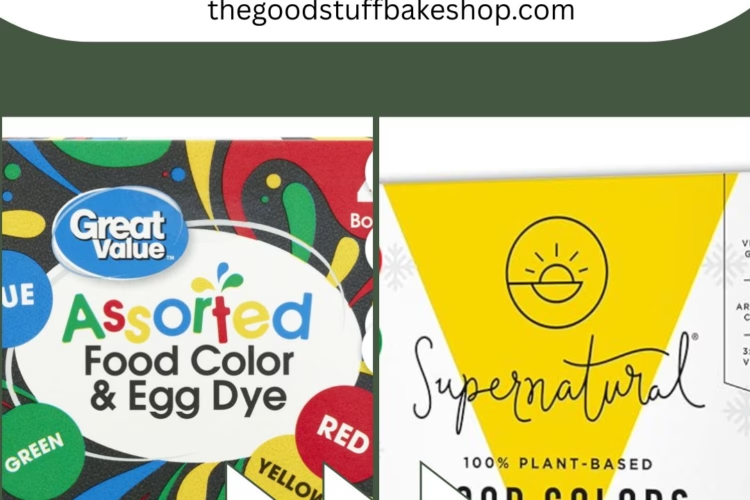
The Good Stuff Simple Swaps – Every Wednesday I share a new Good Stuff Simple Swap, one simple change that helps clean up your everyday eats without overhauling your whole pantry. You can find all the past swaps here!
Holiday baking season is here, which usually means cookies on every surface, sprinkles everywhere, and kids “helping” in ways that mostly involve licking spatulas. If you bake during the holidays, chances are you are also using food coloring-frosting, cookies, icing details, sugar cookies, gingerbread houses, the list goes on.
The problem isn’t the baking. It’s what is often used to get those bright, festive colors.
What’s in most food coloring?
Most conventional food dyes are made with artificial colors like Red 40, Yellow 5, and Blue 1. If you’ve ever flipped a bottle over and read the label, it usually looks more like a science experiment than something meant for cookies.
These dyes are cheap, shelf stable, and very bright. Many families prefer to avoid them, especially during the holidays when kids are already running on sugar, excitement, and very little sleep.
The Simple Swap: Plant-Based Food Coloring
Instead of artificial dyes, I use Supernatural Food Coloring, which is made from plant-based ingredients. This is one of those swaps that feels almost too easy once you try it.
- No artificial dyes
- No mystery ingredients
- Just real color from plants
They even have a red and green holiday set, which makes Christmas baking especially easy. Think sugar cookies, royal icing, buttercream, and all the festive treats without needing a drawer full of dye bottles.
Ingredient Comparison
Typical Yellow Artificial Food Coloring:
Water, propylene glycol, glycerol, sorbitol syrup, FD&C Yellow #5, FD&C Yellow #6, xanthan gum, potassium sorbate, sodium benzoate
Yellow Supernatural Food Coloring:
Beta carotene
One ingredient. Same purpose. Very different label.
Tips for Using Plant-Based Coloring
Plant-based food coloring works a little differently than artificial dye, but it’s easy once you know how:
- Start with a small amount and build the color slowly
- Colors deepen as they sit, especially in frosting
- For darker shades, add color early and let it rest
- Red and deep shades may need a bit more than artificial dye
- For black or dark shades, a small amount of black cocoa works perfectly
It also works beautifully with my Almost Black Dye-Free Icing for piping details or darker colors.
Why This Swap Works
- Keeps festive colors
- Skips artificial dyes
- Fits in frosting, cookies, icing, and all your holiday baking
- Still fun for kids and holiday traditions
FAQ: Plant-Based Food Coloring
Can I use plant-based food coloring in any recipe that calls for dye?
Yes. It works in frosting, buttercream, royal icing, cookie dough, and most baked goods just like artificial colors.
Do I need more to get the same vibrancy as artificial dyes?
Sometimes. Red and deep colors may need a little extra, but you can build the color gradually.
Will the colors fade in baked goods?
They can shift slightly during baking, especially yellows and reds. For frostings and icing, the color usually holds very well.
Are these colors safe for kids?
They are plant-based, made with real ingredients, and free from artificial dyes, so they are a cleaner alternative for holiday baking.
Where can I buy Supernatural Food Coloring?
You can grab it online or at many specialty grocery stores. They have a full range of colors, including a red and green holiday set.
The Takeaway
Holiday baking should be fun. Colorful cookies, bright frosting, and festive treats are part of the magic. Swapping artificial food dyes for plant-based coloring keeps all the color and excitement while using simpler ingredients.
Short version: same festive fun, fewer questionable additives, and easy enough to make your holiday baking a little cleaner.
Be sure to check out all of the past Good Stuff Simple Swaps!
This post contains affiliate links.
Pingback: Almost Black Dye Free Icing-(No Powdered Sugar!)