
Why You Should Weigh Your Flour For Baking Instead of Scooping
What’s all the hype of kitchen scales and why should I weigh my flour?! If you’ve ever wondered why your baking turns out differently even when following the same recipe, the culprit is almost always flour measurement. One person’s cup of flour might weigh 110 grams, while someone else’s might weigh 160 grams. That difference can completely change the texture of your dough or batter.
When you weight flour vs measuring cups it removes the guesswork. Whether you use fresh milled flour or all-purpose flour, grams keep it consistent every time.
On top of all that, it saves you dirty dishes! When using a recipe that does most measuring in weight, you can just plop your mixing bowl on the scale and dump in, less dirty measuring cups is always a win!
If You Don’t Have a Scale: How to Convert Grams to Cups
Even though weighing flour is the most accurate method, you can still convert a gram-based recipe into cups if you need to. This same method can be used in reverse for an existing recipe that measures in cups! The key is knowing that different flours weigh differently.
All-purpose flour averages 120 to 130 grams per cup, so using 128 grams as a baseline works well. To convert:
total grams of flour ÷ 128 = cups needed
Example: 256 grams of AP flour ÷ 128 = 2 cups
Fresh milled flour, whole wheat flour, or whole cell crushed wheat is denser and averages 140 to 155 grams per cup, so 148 grams is a good middle-ground number. To convert:
total grams of flour ÷ 148 = cups needed
Example: 296 grams of fresh milled flour ÷ 148 = 2 cups
This quick formula accounts for the natural density differences between flours.
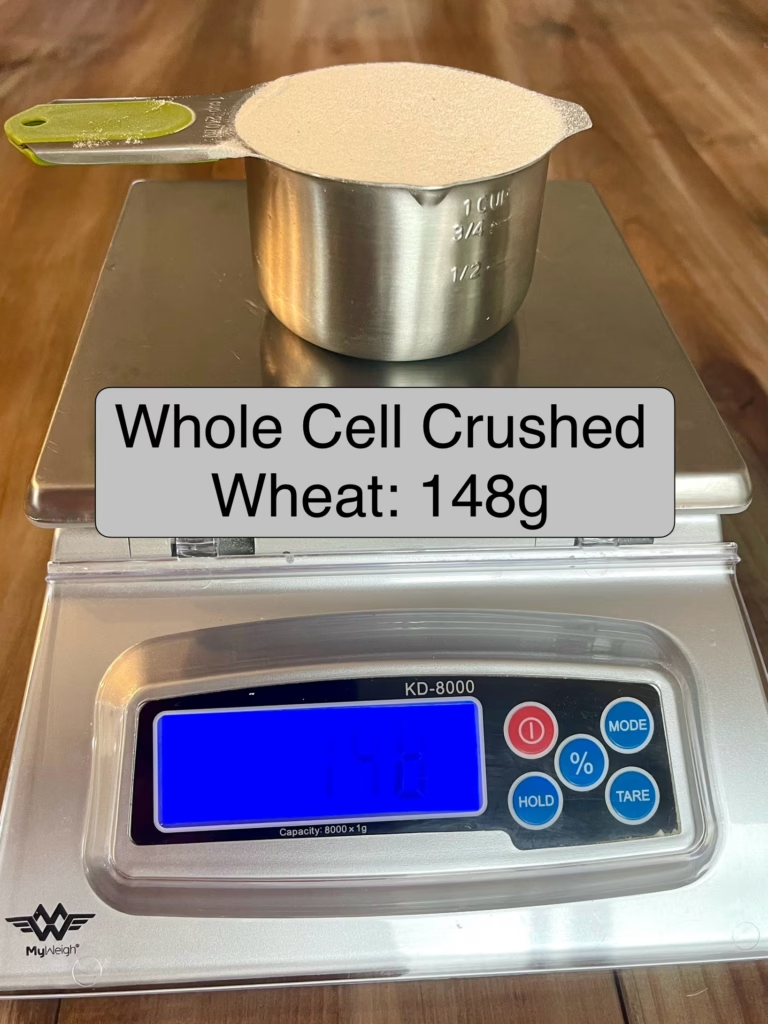
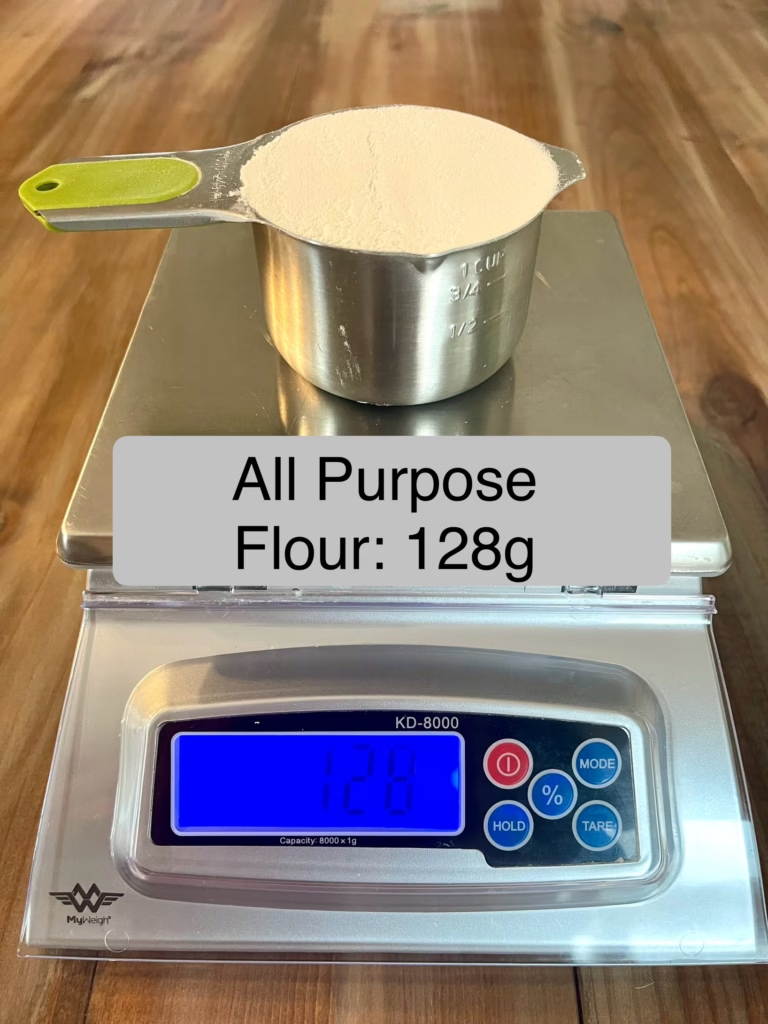
Scale Options
A scale keeps everything consistent and helps your dough (or batter) behave the way it should.
There are so many fun bread gadgets out there, but dare I say… this one is more important than all of them. PLUS- you don’t end up with a whole stack of measuring cups to wash.
The scale in my photos is the one I use (it goes up higher than most budget scales), but you can absolutely start with a cheaper scale like this if you’re not sure you’re all in yet.
Why Fresh Milled Flour Feels Heavier
Fresh milled flour keeps the entire grain intact. It includes the bran, germ, natural oils, and fiber that give the grain substance. That extra nutrition adds weight, which is why one cup of fresh milled flour can weigh significantly more than a cup of all-purpose flour.
Unlike processed flours, fresh milled flour does not fluff up in your measuring cup. It settles compactly, which makes it naturally denser and heavier. That density is a sign of quality, nutrition, and real grain integrity.
Why All-Purpose Flour Seems Light and Fluffy
All-purpose flour appears airy and soft because of how it is processed, not because it is better:
1. Nutrients Are Removed
AP flour is stripped of the bran and germ. These parts contain fiber, vitamins, minerals, and natural oils. What remains is the starchy endosperm, which weighs less.
2. Ultra-Fine Milling
Industrial roller milling creates a very fine powder that traps air. That air makes the flour mound over a cup and feel lighter, but it is not naturally dense.
3. Chemical Treatments
Bleaching agents soften the flour and weaken proteins, giving it a puffier texture.
4. Dryness Removes Weight
Without natural oils from the germ, AP flour is dry, lightweight, and easy to aerate. That is why it scoops and mounds so differently compared to fresh milled flour.
Why Should I Weigh my Flour & How This Matters in Baking
Accurate flour measurement is one of the biggest variables in baking. Using the right weight ensures dough and batter turn out consistent in texture and structure. If you rely solely on cups, results can vary wildly depending on flour type, scooping method, and even humidity in your kitchen.
Weighing flour helps eliminate these variables and gives you repeatable results. If you don’t have a scale, using the gram-to-cup conversion above will get you much closer to the correct amount than guessing.
Bottom Line
Flour is not interchangeable by volume alone. Fresh milled flours are heavier because they contain the full grain. All-purpose flour is lighter because it has been stripped, milled, and sometimes chemically treated. Measuring by weight is the easiest way to make sure your recipes turn out reliably.
With a scale or a simple conversion using grams per cup, you can bake with confidence no matter the type of flour you choose.
Pingback: Mini Maple Pecan Tassies – Easy, Gooey, and No Refined Sugar
Pingback: Quick Easy Sheet Pan Breadsticks –Made with Honey!